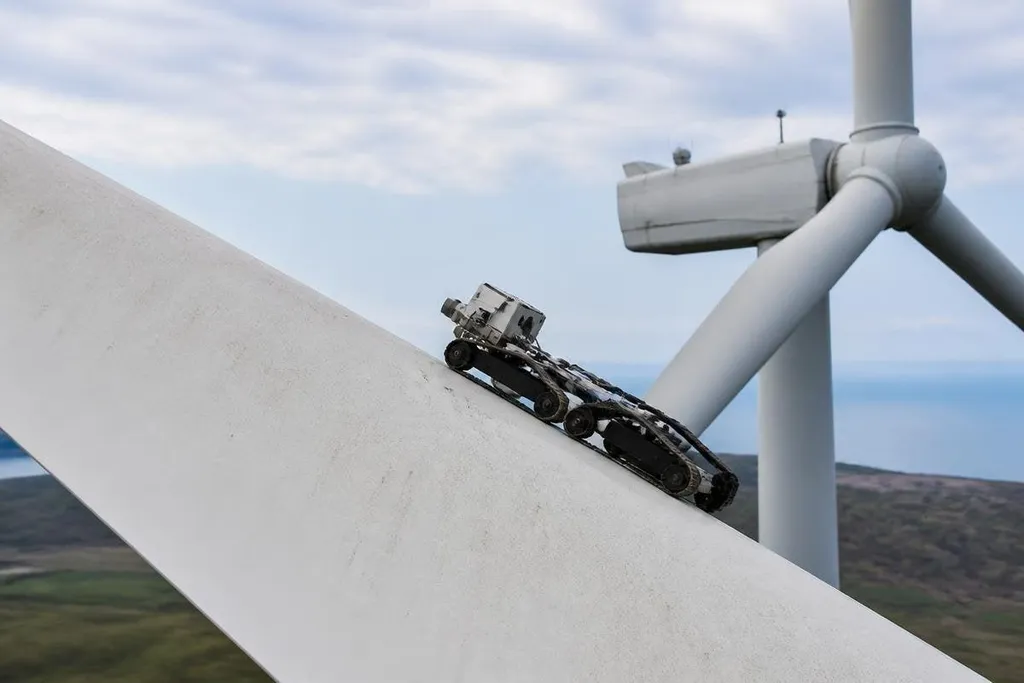
A wind turbine robot may inspect a blade, climb a tower, or carry tools across a nacelle. The hard part is doing that work safely in wind, rain, salt, and poor network coverage, where a stopped robot can delay a repair crew.
Quick read:
- Inspection robots need clear images and repeatable routes, not a dramatic demo.
- Climbing systems must keep contact when the blade or tower is wet.
- Repair robots face a much higher bar because they must control tools and materials.
Inspection comes before repair
The first useful job for a turbine robot is often inspection. Cameras can record cracks, surface wear, lightning damage, and loose parts while a robot moves along a blade or tower.
That work only helps if the images are sharp enough to compare over time. A robot should return to the same area, record its position, and leave a clear record for a technician. A camera feed that looks good in one clip says little about a full blade inspection in changing light.
The robot also needs a safe way to stop. A climbing machine that loses power, drops a wheel, or loses contact with the surface needs a recovery plan that does not put people below it at risk.
A recovery system has to work on the actual turbine, where wind, rain, and blade angle can change its grip. Reports on wind turbine robot systems can name the machine, tower, weather, test date, and recovery method before the article turns to surfaces that change how it moves.
The surface changes the machine
Wind turbine blades are long, curved, and built from layered materials. Their surfaces can collect dirt, ice, salt, and moisture, so a wheel or magnetic track may work well in one test and poorly in another.
Magnets also have limits. They can help on steel towers, but they won't hold a robot to a composite blade. A blade-climbing system may need suction, grippers, cables, or a mix of contact methods. Each choice adds weight, power use, or parts that can fail.
Wind changes the problem again. A machine fixed to a blade still feels movement from the blade itself, while a drone must hold its position near a large moving structure. The control system needs to keep the camera or tool steady without making the robot fight every gust.
Repair needs more than a camera
Inspection produces information. Repair requires force, position control, and a way to handle parts.
A repair robot might need to sand a damaged area, apply material, or clean a surface before work starts. The tool must press with the right force while the robot follows a curved path. Too little force leaves the job unfinished. Too much force can damage the blade.
Teleoperation, where a person guides the robot from the ground, can reduce the need for full autonomy. It also shifts the problem to network delay, camera placement, and operator training. A repair task that works with a direct video link may fail when the signal drops at a remote wind farm.
I'd back inspection robots before repair robots because their work can be checked without asking the machine to control a heavy tool on a moving structure.
What the race should measure
The word “better” needs a task beside it. A robot that moves slowly but records useful blade data may help more than a faster system that needs frequent rescue or misses damaged areas.
A serious field test should report the weather, surface type, work time, failed runs, recovery method, and inspection result.
It should also state how much human control the task required. Without those details, a robot video shows motion, not work value.
The same test should compare the robot with the existing method. That may mean rope access, a drone inspection, or a crew using ground cameras. The comparison should include setup time, time on the turbine, safety controls, and the quality of the final report.
A buyer's checklist
Before backing a turbine robot project, check these points:
- Task: Does it inspect, clean, repair, or carry equipment?
- Surface: Has the system run on the actual blade or tower material?
- Weather: Are wind, rain, ice, and salt conditions recorded?
- Recovery: Can a crew retrieve the robot without climbing after it?
- Control: Does the task need a remote operator, and what happens after signal loss?
- Proof: Does the report include failed runs and a result a technician can verify?
The next useful step for this field is a shared test record, not another short video. Until teams publish field conditions, human input, failures, and repair results, the race is still measuring robot movement rather than turbine work.